
Other Realms


Mystical Beings
Enter the Realm of Mystical Beings
Step beyond the veil of ordinary reality and into a world shaped by myth, legend, and timeless imagination. Here, you’ll uncover the stories of ancient creatures, divine hybrids, and forgotten guardians of the past—each one woven into the tapestry of human belief across cultures and ages.
From the fearsome Minotaur to the celestial Phoenix, these beings carry the echoes of forgotten times, revealing the fears, hopes, and dreams of those who first spoke their names by firelight.
Explore their origins, powers, and the legends they left behind—and let your curiosity guide you deeper into the mystical unknown.

.png)
Oceanid Nymph Perse
Mother of Pasiphae, Circe, and Aeëtes Grandmother of the Minotaur
Perse was born during the first generation of divine beings, long before the reign of the Olympian gods. She was one of the Oceanids—the 3,000 daughters of Oceanus, the endless river that encircles the world, and Tethys, the nurturing mother of all fresh water. The Oceanids were not merely nymphs of rivers and springs; they were cosmic forces of nature, expressions of the living waters that connected the earth, sky, and underworld.
Perse was unlike many of her sisters. She possessed an aura of mystery and potency, not just as a being of water, but as a liminal figure—dwelling at the intersection of light and shadow, intuition and flame. Her name, Perse, may derive from pertho, meaning "to destroy," or “light the fire,” hinting at her connection not only to water but to transformation and hidden power.


Pasiphae
Mother of the Minotaur and Daughter of the Sun God
Pasiphaë (pronounced PASS-if-eye) was no ordinary queen—she was a daughter of Helios, the radiant sun god, and the Oceanid nymph Perse. Her bloodline made her a being of immense mystical power, bridging the realms of light and sea. As queen of Crete, she ruled alongside her husband King Minos, and was known for her grace, wisdom, and hidden sorcery.
In many myths, Pasiphaë was also a practitioner of witchcraft, much like her sister Circe, the enchantress famed for transforming men into beasts. She possessed deep esoteric knowledge and was said to be skilled in herb lore, spells, and astrological magic.


Circe
Enchantress of Transformation & Daughter of Perse
Circe was born of a powerful and symbolic union—her father was Helios, the titan god of the sun, while her mother, Perse, was an Oceanid nymph descended from the vast, primordial waters of Oceanus and Tethys. This elemental pairing of fire and water shaped Circe’s essence: she was both warm and dangerous, radiant yet unknowable.
From her earliest years, Circe was drawn to magic. While her father presided over the sky and her siblings took on royal roles in foreign lands (Pasiphaë becoming Queen of Crete, Aeëtes ruling Colchis), Circe’s fate was different. Her spirit did not belong to courts or empires, but to nature, silence, and the subtle pulse of ancient magic.


Aeetes
King of Colchis, Son of the Sun God, Father of Madea
Aeetes was born of Helios, the all-seeing Sun Titan, who rode his golden chariot across the sky, and Perse, the mystical Oceanid nymph associated with sorcery and ancestral power. From this divine union came three powerful children: Aeetes, Circe, and Pasiphae - each inheriting both celestial light and deep occult wisdom. While Circe became an island - dwelling enchantress and Pasiphae the magical queen of Crete, Aeetes was given dominion over the distant and enchanted kingdom of Colchis, a land famed in myth for it's wealth, mystery, and magical artifacts.


The Minotaur
Guardian of the Labyrinth
Half-man, half-bull, the Minotaur was born of Queen Pasiphaë of Crete and a divine bull sent by Poseidon. From the moment of its birth, the creature was unnatural and terrifying. It was known as Asterion—"starry one"—but the world came to know it simply as the Minotaur. Though it had the mind and strength of a man, it was driven by an uncontrollable beastly hunger. As it matured, its appetite became insatiable and violent. Trapped within the winding halls of Daedalus’s Labyrinth, the creature fed on tributes of Athenian youths until slain by the hero Theseus.


Theseus
Athenian Hero, Slayer of the Minotaur
The Minotaur’s reign of terror continued until the arrival of the Athenian hero Theseus, who volunteered to be one of the sacrificial victims with the secret intention of slaying the beast. Before he entered the Labyrinth, he was aided by Ariadne, the daughter of Minos, who had fallen in love with him. She gave Theseus a ball of enchanted thread, which he used to retrace his steps and escape the Labyrinth after killing the monster.

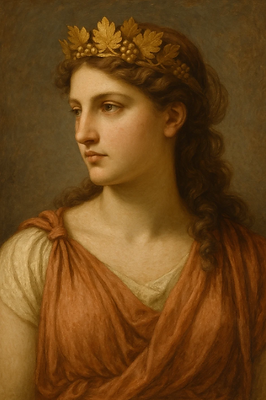
Ariadne
Mistress of the Labyrinth, Princess of Crete, Bride of the God
Ariadne was born to King Minos, the powerful ruler of Crete, and Queen Pasiphaë, daughter of the sun god Helios and the Oceanid Perse. As royalty of both human and divine blood, Ariadne grew up surrounded by palace grandeur and secrets—none darker than the hidden monster beneath the palace: her half-brother, the Minotaur, the result of a divine curse upon her mother.

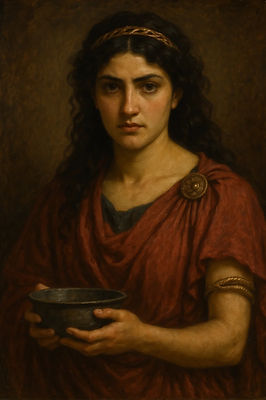
Medea
Sorceress of Colchis, Priestess of Transformation
Medea was born in Colchis, a distant and enchanted land near the edge of the known world, where the Golden Fleece hung under guard of a sleepless dragon in the sacred grove of Ares. She was the daughter of King Aeëtes, son of the sun god Helios, and a powerful Oceanid, often named Idyia, meaning "seeress" or "the knowing one." This made Medea the granddaughter of the Sun and niece of the enchantress Circe, placing her within a bloodline of powerful sorcerers and divine beings.


Jason and the Argonauts
The Quest for the Golden Fleece
Jason was born the rightful heir to the throne of Iolcus, a city in Thessaly. But his uncle, Pelias, seized the throne and imprisoned Jason’s father, King Aeson. Fearing for her son's life, Jason’s mother smuggled him away to be raised in secret by Chiron, the wise centaur and teacher of heroes.


Daedalus
Master Craftsman of the Labyrinth and Maker of Wings
Daedalus was known for being the inventor of the Labyrinth, Father of Icarus, and Artisan of the Gods.
Daedalus was born in Athens, often depicted as a descendant of the royal house of Cecrops, the city’s first king. From a young age, he showed extraordinary intelligence, artistry, and technical skill. He was the kind of figure who blurred the lines between mortal and divine capability, credited with inventing tools, architecture, and sculpture techniques never seen before.
In a time when most artists created lifeless forms, Daedalus was said to make statues that could breathe, move, or seem alive, giving rise to legends that his creations had to be tethered to the ground to prevent them from walking away.
But with great genius often comes envy—and a shadow.