
Other Realms
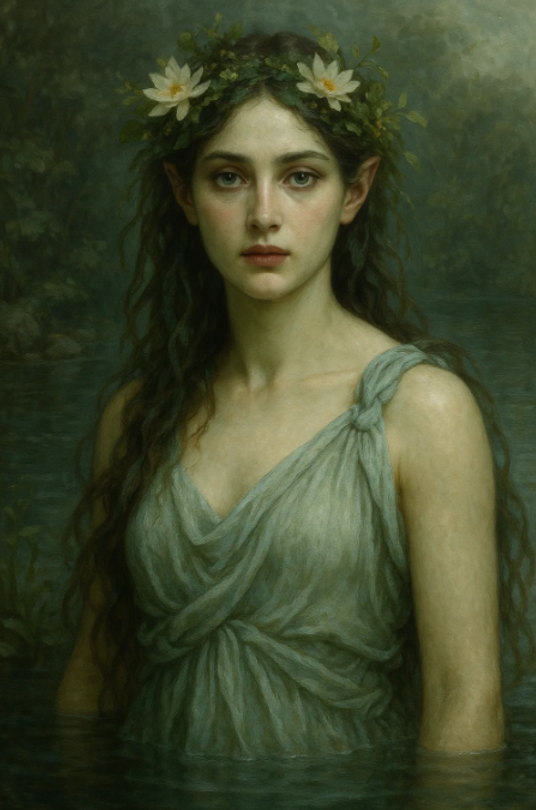

Pasiphae
Queen of Crete, Daughter of the Sun
Pasiphaë (pronounced PASS-if-eye) was no ordinary queen—she was a daughter of Helios, the radiant sun god, and the Oceanid nymph Perse. Her bloodline made her a being of immense mystical power, bridging the realms of light and sea. As queen of Crete, she ruled alongside her husband King Minos, and was known for her grace, wisdom, and hidden sorcery.
In many myths, Pasiphaë was also a practitioner of witchcraft, much like her sister Circe, the enchantress famed for transforming men into beasts. She possessed deep esoteric knowledge and was said to be skilled in herb lore, spells, and astrological magic.
Pasiphaë's story took a tragic turn when her husband Minos incurred the wrath of Poseidon, the god of the sea. Minos had promised to sacrifice a beautiful white bull sent from the depths as a sign of divine favor—but upon seeing the majestic creature, he chose to keep it for himself and offer another in its place.
In retribution, Poseidon did not strike down Minos directly, but instead cursed Pasiphaë with an unnatural desire for the very bull her husband had spared. Under the spell of this divine madness, Pasiphaë’s once-dignified life unraveled into myth and tragedy.
Determined to fulfill her overwhelming desire, Pasiphaë turned to the cunning inventor Daedalus, who crafted a lifelike hollow cow out of wood and leather, allowing her to deceive the bull. From this mythic union, she gave birth to Asterion, a creature who became known to the world as the Minotaur—a monstrous being with the head of a bull and the body of a man.
Though the birth of the Minotaur was a source of shame and fear for the Cretan court, Pasiphaë is said to have loved and nurtured the creature in its infancy. Only when it grew violent and uncontrollable was it cast into the Labyrinth, the vast maze designed by Daedalus to contain it.
Pasiphaë’s myth is complex and layered. She is both victim and witch, a tragic figure caught between divine forces and mortal pride.
Her tale represents the consequences of broken promises to the gods, the fine line between power and madness, the role of women as both creators and sufferers in myth.
Despite her sorrowful story, Pasiphaë remains a symbol of mystical femininity, divine intelligence, and the duality of light and shadow.
